
The Afghan Women’s Cycling Archive
Preserving the legacy of Afghan women and girls who changed history on two wheels so that future generations will know their stories.
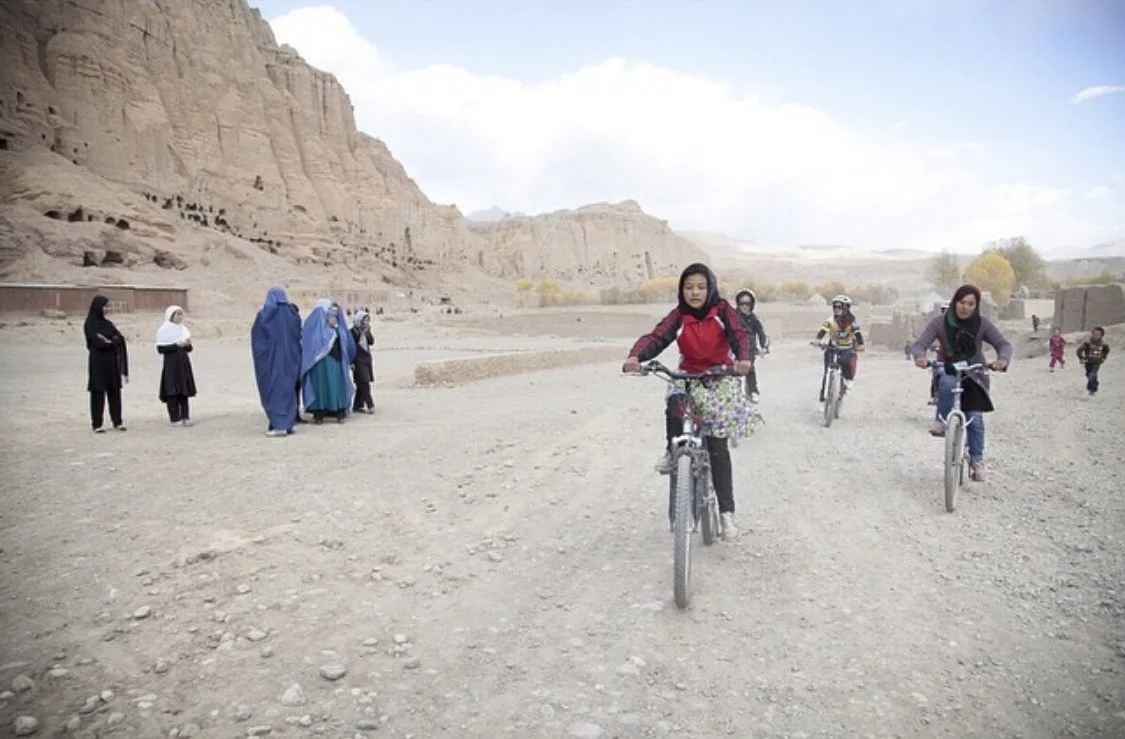
when afghan women took the streets on two wheels, they changed history
Afghan women began cycling in Afghanistan in 2011 in Kabul and Bamyan - defying taboos, threats, and a lack of infrastructure to claim space, visibility, and freedom.
By 2021, over 200 women were officially registered as cyclists across seven provinces, with the Afghan Cycling Federation. Hundreds, if not thousands, more learned to ride at home, with independent teams and clubs, or at school. Cycling became a symbol of resistance and global recognition followed in the form of Nobel Peace Prize nominations, international media coverage, documentary films, books, and museum exhibitions.
The first Afghan cyclist raced in the Olympics in the Tokyo Olympics while the Taliban walked back into Kabul to retake the country. Two more defiantly raced at the Paris Olympics three years later.
Today, the Afghan Women’s Cycling Archive protects these stories from erasure, preserving a powerful legacy of courage, change, and possibility.
the documentary
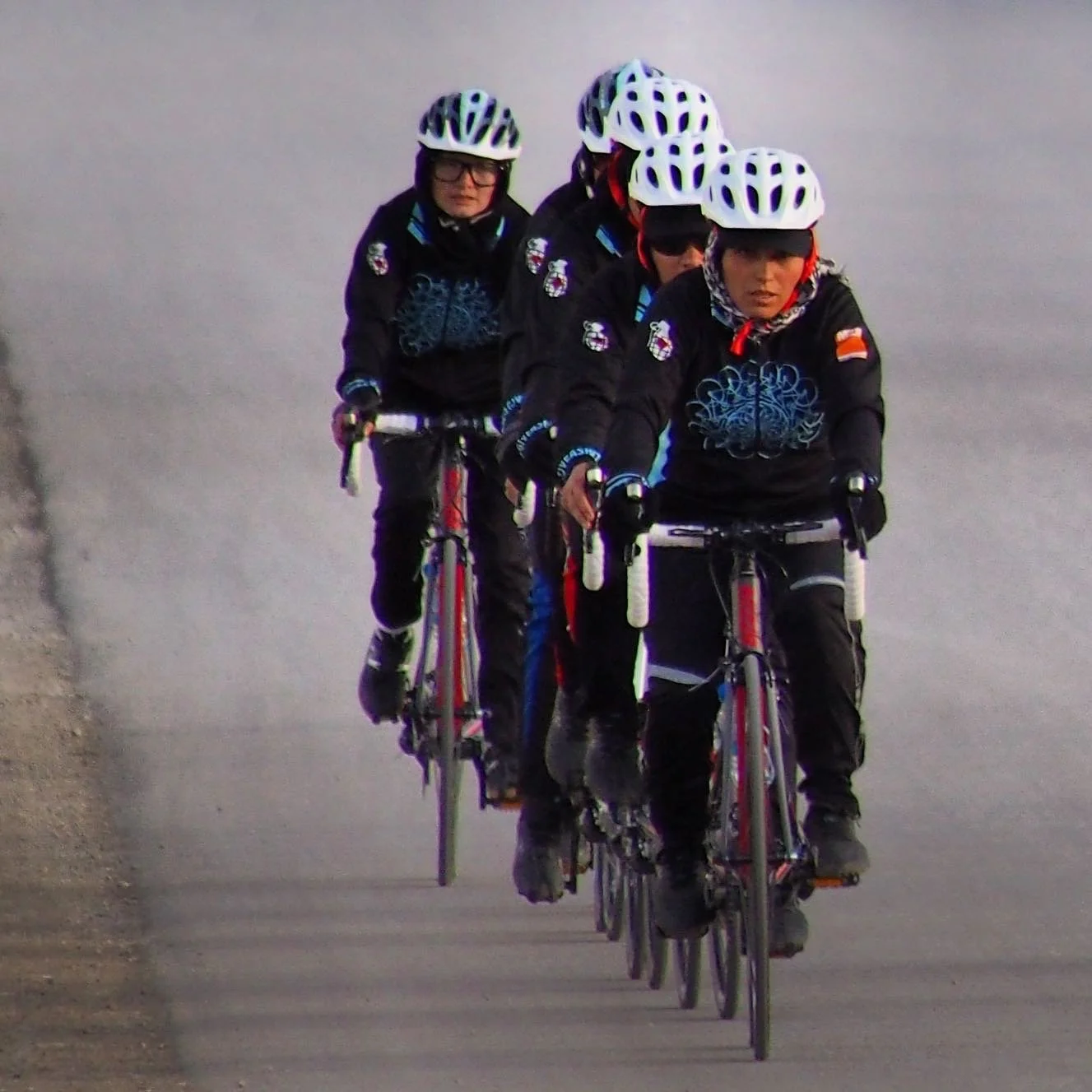
The Afghan National Cycling Team
Founded in Kabul in 2011, the National Team operated under the Afghan Cycling Federation. For several years, the national team and the Kabul team were synonymous as there was no formally recognised women’s provincial teams. The women raced against their peers in Pakistan and India, and cyclists like team captain, Marjan Seddiqe became the first Afghan women to race at major competitions outside the region in countries like Kazakstan. Options to compete were limited due to difficulty of gaining travel visas.
In 2015, the team was chosen as National Geographic Adventurers of the Year and nominated for the Nobel Peace Prize.
Masomah Alizada claimed asylum with her family in France in 2017 and raced with the Olympic Refugee Team at the Tokyo Olympics in 2021. Her race was overshadowed by the Taliban takeover of Afghanistan and the beginning of the evacuations. Masomah became the Chef de Mission of the Olympic Refugee Team for the Paris Olympics and has become a prominent spokesperson for other refugee athletes.
Sisters, Yulda and Fariba Hashimi were evacuated to Italy in 2021 and became the first Afghan women to race under the Afghan flag at the UCI World Cup in Glasgow in 2023 and the Paris Olympics in 2024.

Bamyan Women’s Cycling
The women’s cycling revolution in Bamyan started with one woman. Zahra Hussaini. She learned to cycle in Iran, and when she returned to Bamyan, she began teaching her peers to ride. She entered races against men, hiding her identity. She co-founded the first bike team in Bamyan with her best friend, Zakia Mohammadi. Team Shahmama was named after the female Buddha overlooking the valley, blown up by the Taliban. Together, they grew the sport and normalized the culture of girls on bikes. Their team was the first women’s founded and women’s bike team in Afghanistan’s history. They were challenged by local mullahs to stop cycling, but Zahra and Zakia met with the mullahs directly to gain their acceptance and continue riding. Women’s cycling expanded across the province, and the first women’s races occurred in Bamyan.
They opened the door for a generation of girls to follow through. When the Taliban arrived in Bamyan, Team Shahmama had already evolved past its founders. A new team, Team Oqab, had been formed by the next generation of riders. Dozens and dozens of young women flooded the streets in matching cycling kits. Training, racing, without any of the constraints that their predecessors had known.
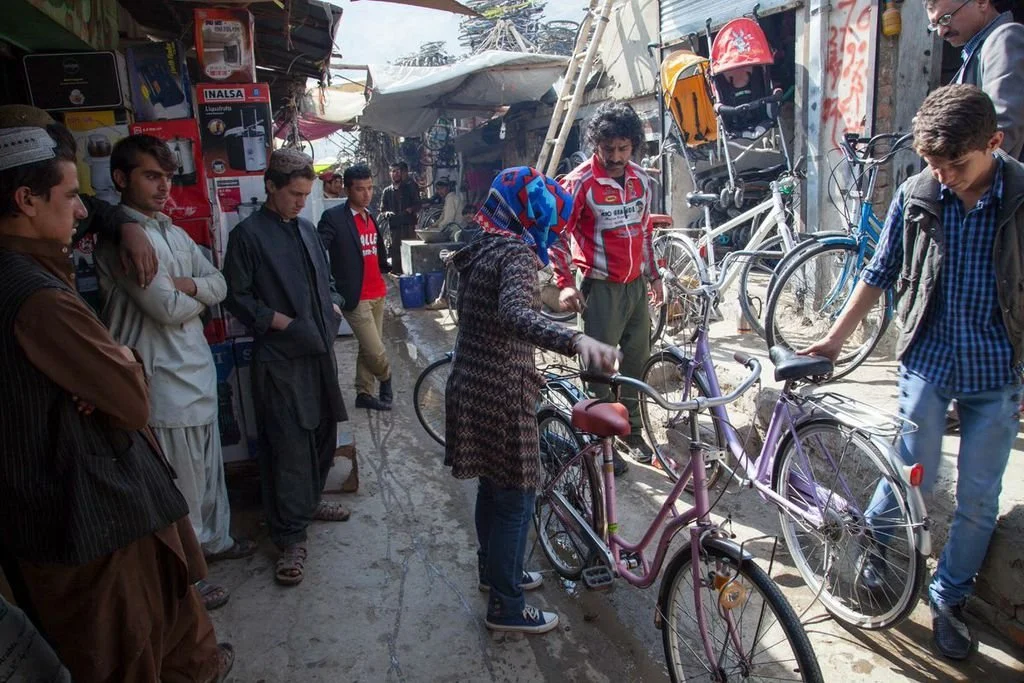
Bike Clubs
Bike Clubs were formed by teenage girls in Kabul and Bamyan around the same time the Afghan National Women’s Cycling Team began training. The club in Kabul was founded by Fatima Haidari in 2013. That club lasted two years and then members formed new clubs in different parts of the city, including the co-ed Borderfree cycling club. Bikes were used in protests; climate justice, social issues, women’s rights,, and political.
By 2016, girl’s social clubs and after-school groups chose cycling as their ‘new skill’ and asked NGO’s for bicycle donations. NGO’s donated bikes to girls’ schools as transportation in rural communities.
Bike clubs may have existed prior to 2013, and prior to the first Taliban regime in the 60s and 70s - which is part of the archive’s research to complete the history of the Afghan women’s cycling. We know women’s cycling as a competitive sport didn’t exist before 2011, but we also know there are rare stories of Afghan women on bikes.
You can support the project in several ways.
Donate to help fund the first phase of oral history collection of the archive through our new crowdfunding campaign on Chuffed
If you want to become a sponsor or donate directly - donations can be accepted through our partner, The Tawana Organization. Please contact us for more information.
Follow and support the project on Patreon to help build our project and be part of the storytelling community. Online and in person storytelling and behind the scenes content.